New Report Finds Ties Between the Most Common Cancers in Iowa and Environmental Risk Factors
posted
on Wednesday, March 25, 2026
in
Council News
"Environmental Risk Factors and Iowa's Cancer Crisis" Explores the Impact of Pesticides, Nitrate, PFAS, and Radon on Iowa's Outlier Cancer Rate
DES MOINES—Today, the Iowa Environmental Council and The Harkin Institute for Public Policy and Citizen Engagement released a new report, "Environmental Risk Factors and Iowa's Cancer Crisis." The report is a review of top scientific studies and academic research exploring the environmental risk factors impacting Iowa’s high cancer rates, and an analysis of the crossover between these risk factors and specific cancer trends in Iowa.
The focus areas of the report include:
- Pesticides (particularly the three most applied pesticides in the state — glyphosate, acetochlor, and atrazine)
- PFAS (“forever chemicals”)
- Nitrate
- Radon
- Other industrial contaminants present in Iowa
Visual mapping and data help tell the story of Iowa’s unique environmental risk profile, including cancer's impact on younger Iowans. The report also includes specific recommendations for policy and regulatory actions that local, state, and federal policymakers should take to reduce Iowans’ cancer burden. The goal of the report is to educate Iowans about the environmental risk factors of cancer and to focus efforts on the changes that will make the most difference.
This report explores scientific literature, academic research, and data about environmental risk factors in Iowa, and organizes the information in way that is designed to be accessible to Iowans.
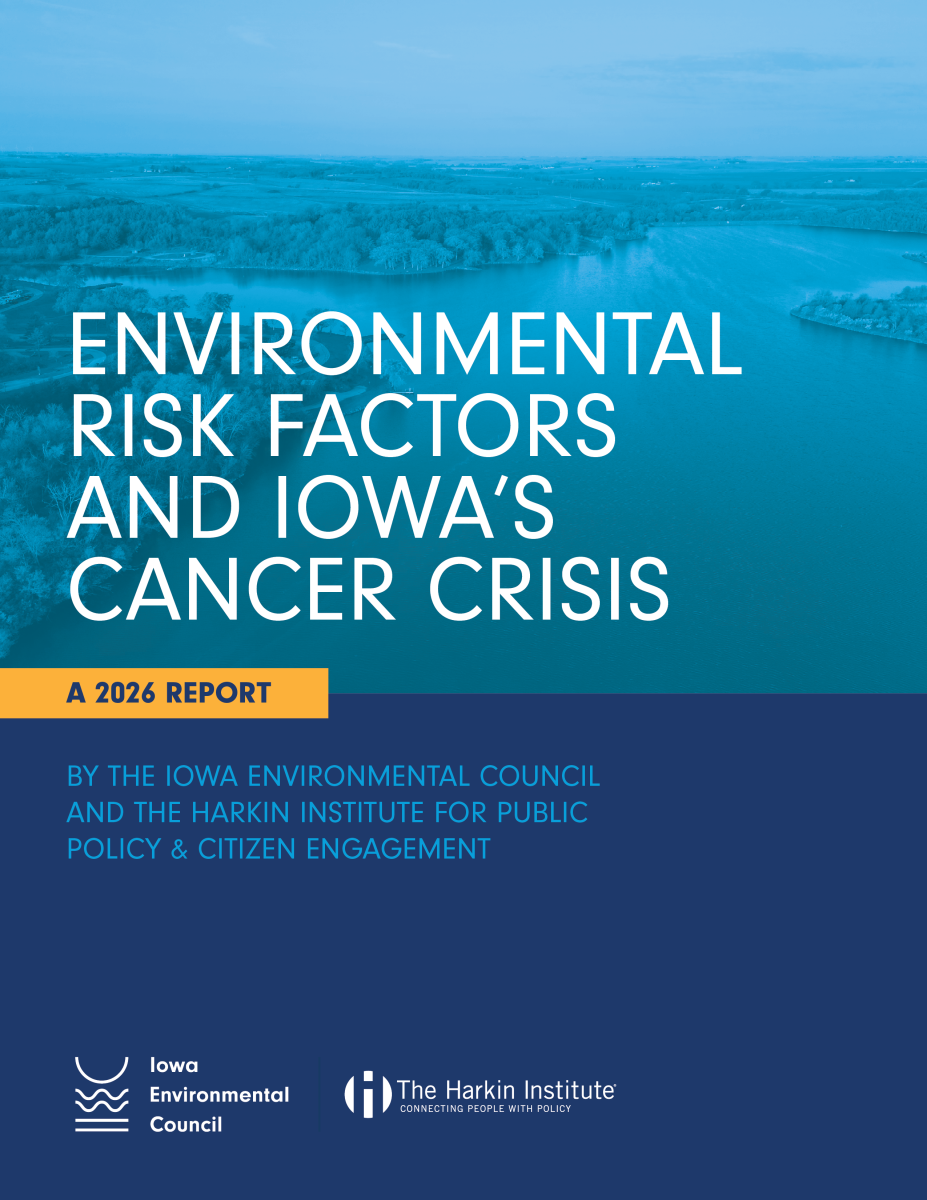
While there is public awareness that behavioral factors such as smoking, alcohol consumption, and exposure to UV light from the sun or tanning beds can cause cancer, environmental factors — what is in our water, soil, and air — are discussed far less. Iowa has some of the highest nitrate levels in drinking water in the U.S., extensive and intensive pesticide use, elevated radon concentrations in homes, and emerging concerns about PFAS contamination.
"Iowans deserve to understand what risks we are facing," says Sarah Green, Executive Director of the Iowa Environmental Council. "This report demonstrates clear links between environmental pollution and our health and wellbeing — and it includes actionable steps that elected officials and government agencies can take to significantly reduce our cancer burden. This is an issue we cannot afford to ignore. Iowans are paying with our lives."
In 2025 and early 2026, IEC, The Harkin Institute, and the Iowa Farmers Union hosted 16 listening sessions throughout the state. The teams heard from more than 550 Iowans, both rural and urban, living in areas with high cancer rates. Iowans overwhelmingly said they do not have enough information about environmental risks, and they are deeply worried about exposure to pesticides and manure runoff, drinking water contamination, and industrial pollution.
"Hundreds of Iowans told us they had concerns about environmental risk factors connected to our water and agricultural exposures," says Adam Shriver, Director of Wellness and Nutrition Policy for The Harkin Institute. "Our report confirms that they were right to be concerned. We hope this report provides data to help explain the scope and scale of the challenges we are facing, as well as what we can — and should — do to reverse course."
Click here to learn more about the project. For more information or to arrange an interview with report authors, contributors, or listening session participants, please contact Bethany Kohoutek at kohoutek@iaenvironment.org.
###
The Iowa Environmental Council is the state's largest and most comprehensive environmental alliance, comprised of diverse organizations and individuals working together to protect Iowa's natural environment. Through education, advocacy, and coalition-building, the Council raises awareness, generates action, and creates large-scale change. We work on federal, state, and local public policy issues to ensure a just, healthy environment and sustainable future for all Iowans.
The Harkin Institute for Public Policy & Citizen Engagement is located at Drake University and serves as a venue and catalyst for dynamic non-partisan research, learning, and outreach to promote understanding of the policy issues to which U.S. Senator Tom Harkin devoted his career.