Why Environmental Justice Matters in Black Communities
posted
by Guest Blogger on Thursday, May 28, 2026
For many people, nature represents peace, healing, and connection. Parks, lakes, rivers, trails, and green spaces are often described and experienced as places where communities can recharge physically, mentally, and emotionally. But access to these spaces, a sense of belonging, and environmental justice has never been equal—especially for Black, Indigenous, and People of Color (BIPOC) communities.
Environmental justice is about more than protecting forests and wildlife; it is also about ensuring that every person, regardless of race, income, or zip code, has safe access to clean water, healthy outdoor spaces, and the opportunity to experience nature and the outdoors without barriers.
The idea that the outdoors is “for everyone” has not always reflected reality and, despite ongoing efforts, still does not for many communities today. During Jim Crow, Black Americans were excluded from many parks, beaches, and recreation areas. Later, redlining trapped many Black families in underinvested neighborhoods with fewer trees and parks and greater exposure to highways, pollution, and industrial waste. These environmental inequities continue to shape public health outcomes today, as seen in the Flint water crisis. Even in our own state, Iowa has one of the highest cancer incidence rates in the United States, ranking second nationally for new cancer cases. Although there are many possible contributors, water contamination is one likely factor (Iowa Environmental Council, 2026). More specifically, in Polk County, Black Iowans experience higher cancer mortality rates than other racial groups (One Economy Report, 2025).
Nature, the outdoors, and environmental justice should not be treated as privileges reserved for certain communities. Access to clean parks, trails, rivers, and lakes is a public health right, a human right, and, quite honestly, a civil right.
Fostering inclusive outdoor spaces means building environments where all people feel welcomed, respected, and represented. When BIPOC communities are included in conversations about conservation, recreation, and environmental leadership, stronger and more sustainable outcomes emerge. When inclusion is prioritized, nature becomes a space of belonging rather than exclusion, and healthier communities with access to nature, the outdoors, and clean water can thrive. Until environmental issues such as access to clean water are recognized as equal rights, the work must continue for all.
.png)
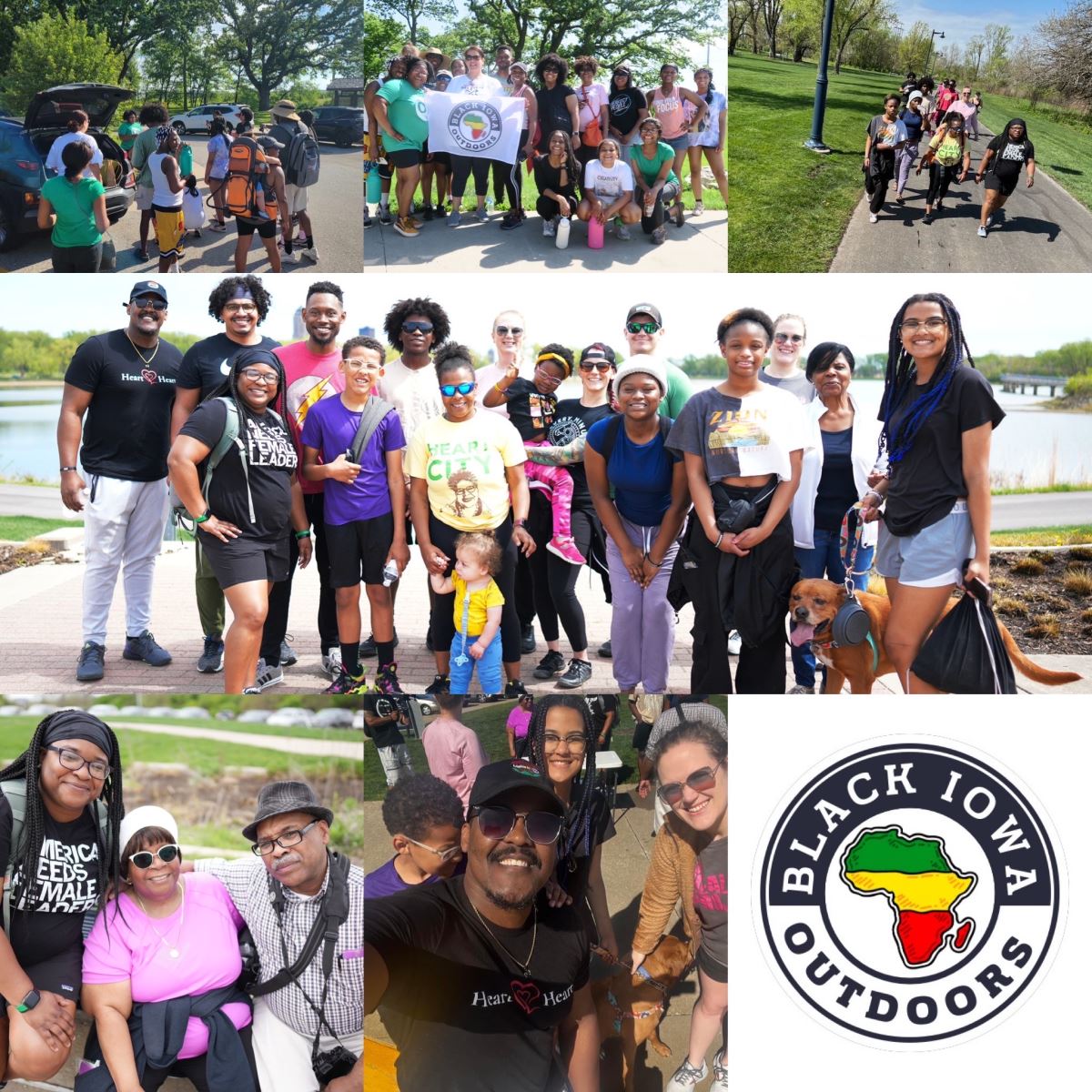
Monica Goodlett is the founder of Black Iowa Outdoors, an organization with a mission to improve the health and well-being of Black Iowans while fostering a meaningful connection to nature and community, leading monthly hikes, and other outdoor activities and environmental-conservation efforts.
A graduate of Grand View College, Monica brings more than 18 years of nursing experience, dedicated to improving health outcomes and advocating for underserved communities. She is a founding member of the Iowa Chapter of the National Black Nurses Association, helping to create space for professional excellence, mentorship, and advocacy among Black nurses across the state. Driven by a deep commitment to holistic wellness.
Monica’s leadership journey includes being a 2025 LeadDSM Community Connect Alum and a 2023 Director’s Council – African American Leadership Academy Alum, and a recent graduate of the Engage DSM Resident Academy. She is immensely grateful to these organizations for providing profound experiences that have equipped her with strong, culturally grounded leadership and community engagement skills to equip and empower her to drive meaningful change. These experiences strengthened her resolve to address community needs, confront racial disparities, and lead with authenticity, collaboration, and purpose.
At the heart of Monica’s work is a passion for meaningful connections, uplifting voices, and creating opportunities for healing. She is guided by a quote from Dr. Martin Luther King Jr. that continues to shape her approach to service and leadership:
“If I cannot do great things, I can do small things in a great way.”
Through nursing, leadership, and community engagement, Monica Goodlett lives this belief—proving that consistent, compassionate action can create lasting impact.
Sources
American Bar Association. “History of Redlining and the Environmental Legacy Inherited,” 2024.
University of Michigan School for Environment and Sustainability. “Redlining and Environmental Racism,” 2021.
Iowa Environmental Council. (2026). Environmental risk factors and Iowa’s cancer crisis: A 2026 report. Iowa Environmental Council.
National Geographic Education. “Pollution and Unequal Burdens,” 2025.
NAACP. “Environment & Climate Justice.”
National Park Service. “National Park Service publishes two historical studies surfacing tragedy and resilience in Black recreation,” 2023.
The Director’s Council. (2025). One economy, building opportunity for all: A path forward. Tdcdsm.org.