"Which Water Worry, Where?" A Paddler's View from the River
posted
by Guest Blogger on Thursday, July 9, 2026
I am often reminded of this phrase from a blog post written by Dan Haug while at Prairie Rivers of Iowa. He began with a story about a couple who had quit paddling due to nitrate in Iowa rivers, not understanding that nitrate must be ingested over time to be a health concern for adults. This story was an introduction to what one should worry about, and when one should not. Iowans are hearing more and more about nitrate, PFAS, pesticides, E. coli, harmful algal blooms, and cancer risk. Those concerns are real, but they pose different risks depending on whether you are drinking the water, wading, swimming, or paddling.
For paddlers, swimmers, anglers, and anyone stopping on a sandbar for lunch, bacteria and pathogens are a more immediate concern than nitrate, especially when water is swallowed, wounds are exposed, or your head inadvertently goes under water. Bacteria and pathogens can be higher in streams than at our public beaches, especially after heavy rain. Most paddlers don't plan for an unexpected swim, but as a paddling friend likes to say, “We’re all between swims.”
Most paddlers are casual about the risks because we rarely connect symptoms to our time on the river and because waterborne illnesses seem rare. We eat lunch on sandbars without thinking much about hand sanitizer. We wouldn't give up paddling, but we could be more conscious of the different ways we come into contact with water. Paddling is more about our connection to the river than our contact with it. We move through a living landscape – a linear “park” and wildlife corridor. As paddlers, we see the effects of changes to the land, if you know how to look.
Draining the land with perforated tile changed our streams. Water that once moved slowly through prairie soils and wetlands now reaches creeks and rivers much faster. Natural river processes are sped up or pushed out of balance. We notice cut banks, vegetated banks, shifting sandbars, growing point bars, and rock bars spilling from steep ravines. We see the abundance and diversity of freshwater mussels — or their absence — and rows of corn at the very edge of a streambank. The river is doing what rivers do; trying to maintain a balance of flow and sediment load, but the speed and scale of that change reflect what we have done to the land.
I find that smaller streams and slightly larger ones with low flow require even more attention. Reading the current and watching for the thalweg — the deeper part of the stream — sideslipping around rocks and logs keeps a person engaged with the river rather than just floating down it.
That may be the part of paddling I value most. Active, but not hurried. Noticing the current, depth, wind, rocks, trees, birds, mussels, sandbars, and the condition of the banks. This pathway changes after a rain bringing pathogens, fast water, or strainers (fallen trees in the water). It is in these moments, I’m reminded which water worry, where?
For a private well user, the worry may be nitrate. For a parent at a beach, it may be bacteria or microcystin (a harmful algal toxin). For a mussel, it may be sediment, habitat loss, or decades of poor water quality. For a fish, it may be temperature, habitat, or low oxygen. And for a downstream community, it may be the cost of treating water that arrived at the intake carrying the consequences of decisions made far upstream.
None of that makes me want to stay away from rivers. It makes me want to understand them better. Paddling is one way to do that. It puts us close enough to notice what is healthy, what is changing, and what has been damaged.
We protect what we know. Paddling is one way of knowing water — not just as a number on a report, but as a river we move through, learn from, depend on, and have a responsibility to protect.
About the Author
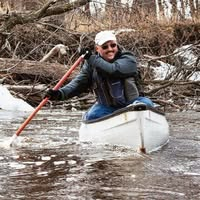 Rick Dietz is retired and serves on the Board of Directors at Prairie Rivers of Iowa. An avid paddler, he spends much of his time volunteering with environmental nonprofits and managing invasive species for Story County Conservation. His time on Iowa‘s rivers has deepened his interest in water quality and the ways land use shapes the water we paddle.