Mussels Have Been Testing Iowa's Water Longer Than I Have
posted
by Guest Blogger on Monday, August 17, 2026
Two days ago, I found two live baby mussels on my sand bar. They were stranded — the river dropped faster than they could dig in. But finding them was good news.
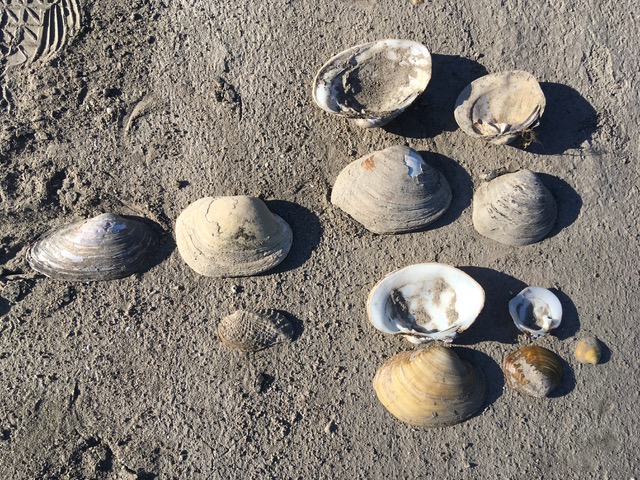 Nearly 40 years ago, my wife and I bought thirty acres in Dallas County for a water getaway. The North Raccoon runs through it, and that first summer I noticed mussels in the shallows. We would follow their trails in the sand and plunge our hands in, removing the treasure below before returning them to the river. I grew up on a lake in Indiana and knew exactly one kind — here there were many, and I wanted to know them better. Over time I amassed a large collection of shells and mailed my identifications to Scotty Gritters, a fisheries biologist in northeast Iowa; he sent them back corrected. Larry Gullett at Dallas County Conservation and Kelly Poole at the IDNR taught me more. On a float trip, Larry told me the mussel population dropped sharply after the 1993 flood, which "moved so much sand that it buried the mussels so deeply they couldn't survive." Finding these two babies reminded me why mussels belong in Iowa's water conversation — and why losing them costs more than a species.
Reading a river
With the help of the Izaak Walton League, I test nitrate, phosphorous, ph, chloride, dissolved oxygen, turbidity and temperature. Our numbers are not getting any better over the past 20 years since I started testing. in fact they are getting worse. That tells me about the water on the day I stood in it. A mussel bed tells you about the last fifty years. Mussels do not move. They filter all day. They live for decades and write a record in their shells. And they are exquisitely sensitive to what we put in the water.
But what makes a mussel bed worth reading is how it got there. Mussels cannot swim. When a mama mussel is ready to send her young off, she grows a lure — a flap of flesh that looks like a minnow — and waves it in the current. When the right fish strikes, she squirts her babies into its mouth. The glochidia, or babies, hook onto the fish’s gills and hitch a ride, then drop off, dig into the sand, and begin filtering.
Mussel mamas are picky. Most will only send their young off with select species of fish, so a mussel bed is also a record of the fish swimming over it a generation ago. Lose the fish and the mussels go too — not right away, but over the following decades, without anyone noticing.
What goes with them
A mussel bed filters algae and sediment and stabilizes the river bottom so it does not wash out in high water. Muskrats, otters, and raccoons eat them. Their shells give small fish and insects somewhere to hide. Eliminate the mussels and a river does not lose one animal; it loses infrastructure a lot of others were using.
I saw that infrastructure once. Tom Hadden asked me to organize Izaak Walton League volunteers to pull trash from the Des Moines River between the dams and, with Saylorville dam holding water back, the river went to a trickle. Steve Roe, Don Propst, other IKES members, and I hauled out tons of garbage and found thousands of mussels — six species — stranded in the sand. We spent the day pitching them back into the remaining river channel.
Why so many there? Because that stretch had what the mussels needed. The dams took the flashiness out of the river. The sand stayed put, and there were fish to carry the babies to new areas to colonize. Steady flow, a stable bottom, a full complement of fish — that short list is also what we have taken out of most of Iowa's other rivers.
Mussels have been on this planet for more than 200 million years. Those two stranded babies I found on my sand bar mean reproduction is still going on. Their siblings survived somewhere. So go look. Protect the healthy tributaries that remain. Turn over some rocks and look for mussels, minnows, mayflies, and caddisflies.
About the Author
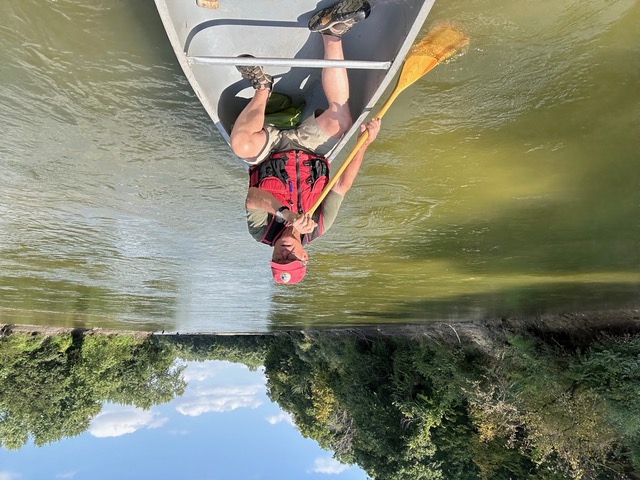
Mike Delaney is a retired educator who has always been interested in the outdoors through fishing with his father and hiking around Lake Pleasant in Northeast Indiana. After buying a small farm on the Raccoon River, Mike Delaney founded the Raccoon River Watershed Association. He helped with the Raccoon River Trail effort, spearheaded river clean-ups, river health research efforts, water quality testing and the annual Life in the Raccoon River Conferences. Mike spends his free time tending bees, gardening, hunting, fishing, improving his timber and restoring prairie on his farm in Dallas County, Iowa.