Nitrate 101: What Iowans Need to Know Now
posted
by Colleen Fowle on Wednesday, June 3, 2026
Nitrate 101: What Iowans Need to Know Now
For many Iowans, nitrate pollution becomes a headline only when water utilities ask us to reduce water use or when our favorite public beach closes because of a toxic algal bloom. But more Iowans are realizing that nitrate is a year-round and growing problem in our state, with scientific evidence that these record-high levels are impacting not just our lawns and recreation time, but our health and lives.
This guide explains what nitrate is, how it enters our water, what scientific research says about health risks, and how we can address this pollution at its source.
Want to get important Iowa water updates delivered to your email inbox every Friday during the summer beach season? Click here to sign up for our Weekly Water Watch email newsletter.
What is Nitrate?
Nitrate is a molecule composed of nitrogen and oxygen that occurs naturally in the environment and is essential for plant growth. It is found in soil, water, plants, and the atmosphere.
In Iowa, however, nitrate levels are much higher than natural background levels in our environment. Because nitrate dissolves easily in water, it is readily transported through B Iowa’s heavily altered landscape, where 85% of our land is used for agriculture and extensive tile drainage networks are in place. Therefore, nitrate moves quickly from farm fields into surface and groundwater, impacting major drinking water sources.
Primary sources of nitrate in Iowa include:
- Commercial fertilizers and manure from livestock operations
- Runoff and drainage from agricultural land
- Leaky septic systems and wastewater sources
Research and water quality monitoring consistently show that agricultural sources are the largest contributor – by far – to nitrate pollution in Iowa’s rivers.
How Nitrate Gets into the Human Body
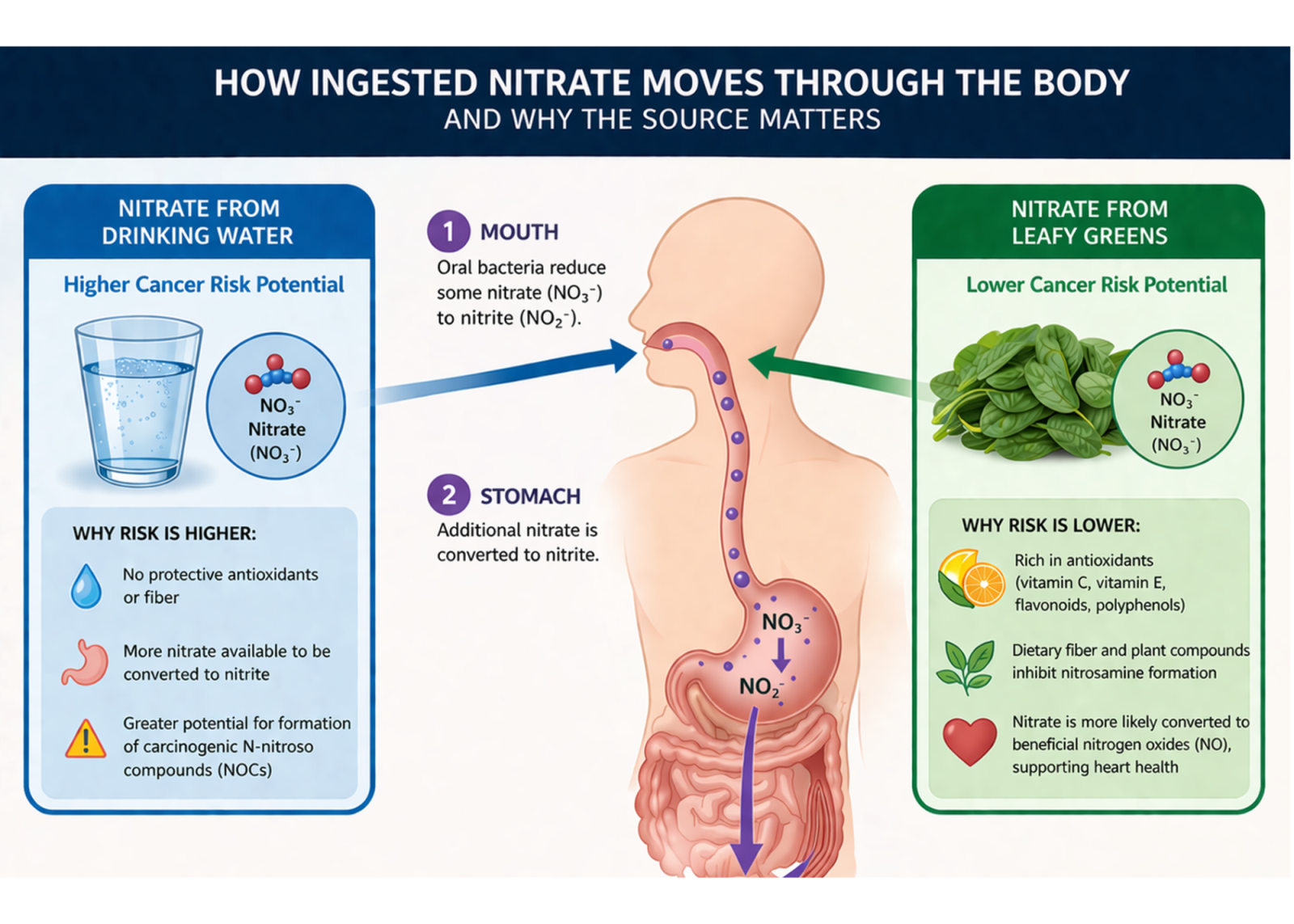
People are exposed to nitrate primarily through drinking water and food. When nitrate is swallowed, the body converts some of it into nitrite. Nitrite can then be converted into N-nitroso compounds, which can cause cancer. The source of nitrate matters. Vegetables naturally contain nitrate, but — and this is important — they are also packed with beneficial nutrients and antioxidants that inhibit the chemical reaction that converts nitrate into carcinogens. Drinking water contaminated by nitrate (even at levels lower than the EPA standard of 10 mg/L) is different because it is not offset by beneficial vitamins and antioxidants. When people are exposed to high levels or even to low levels over many years, serious health harm can result.
The Health Risks of Nitrate Exposure
Blue Baby Syndrome
For decades, blue baby syndrome was the medical risk most commonly associated with nitrate exposure. In fact, the federal drinking water limit for nitrate of 10 mg/L was established in 1962 to protect infants from methemoglobinemia (or blue baby syndrome). This potentially life-threatening condition reduces the blood’s ability to carry oxygen. Infants are particularly vulnerable.
Cancer
IEC’s recent “Environmental Risk Factors and Iowa’s Cancer Crisis” report shows associations between nitrate-contaminated drinking water and several types of cancer, including colorectal cancer, ovarian, and bladder cancer. This is especially concerning given Iowa’s status as the state with the second-highest cancer rate in the nation and one of only three states where the rate of cancer is increasing. The research shows cancer associations with nitrate at levels far below the federal standard of 10 mg/L — some as low as 2 mg/L when exposure occurs over long periods of time. That means that drinking water with low levels of nitrate over several years could increase Iowans’ chances of being diagnosed with cancer.
Other Health Impacts
Research has also linked nitrate in drinking water to birth defects, thyroid disease, and adverse pregnancy outcomes.
Nitrate and Lawn Watering
In June of 2025, Central Iowa Water Works issued its first-ever lawn-watering ban to its 600,000 customers after nitrate levels reached high levels in all of the water sources it uses for drinking water. The utility had to operate its nitrate removal system for extended periods in order to keep treated drinking water below the federal requirement of 10 mg/L — a challenge when the Raccoon and Des Moines Rivers tested as high as 20 mg/L. Restricting outdoor water use reduced overall demand on the system and helped ensure enough treated water was available for drinking, cooking, bathing, and other essential needs.
In 2026, water utilities across the state are again facing elevated nitrate levels. On May 27, Central Iowa Water Works called on customers to voluntarily reduce outdoor water use by 50%, and as of June 1, Des Moines Water Works’ nitrate removal system has been running 140 of the 151 days this year, reflecting the persistence and severity of nitrate contamination in central Iowa waterways
Even though Central Iowa Water Works oversees one of the best nitrate removal systems in the world, it is a challenge to remove unprecedented levels of nitrate flowing into source rivers from upstream agricultural land.
Why Transparency Matters
Attempts to obscure the source and scale of the nitrate problem undermine efforts to fix it. At IEC, we have repeatedly raised concerns that state leaders and agribusiness industry heads choose to highlight dollars spent on conservation, NOT actual measurements of nitrate removed from waterways or data about water quality improvements. In fact, efforts to preserve Iowa’s existing robust water quality monitoring system were undermined by the legislature this year, when more Iowans than ever are demanding answers about Iowa’s water quality crisis. Thousands of Iowans wrote, called, and visited their legislators, asking them to restore funding to the water quality monitoring network operated by IIHR-Hydroscience and Engineering at the University of Iowa, but the legislature failed to do so.
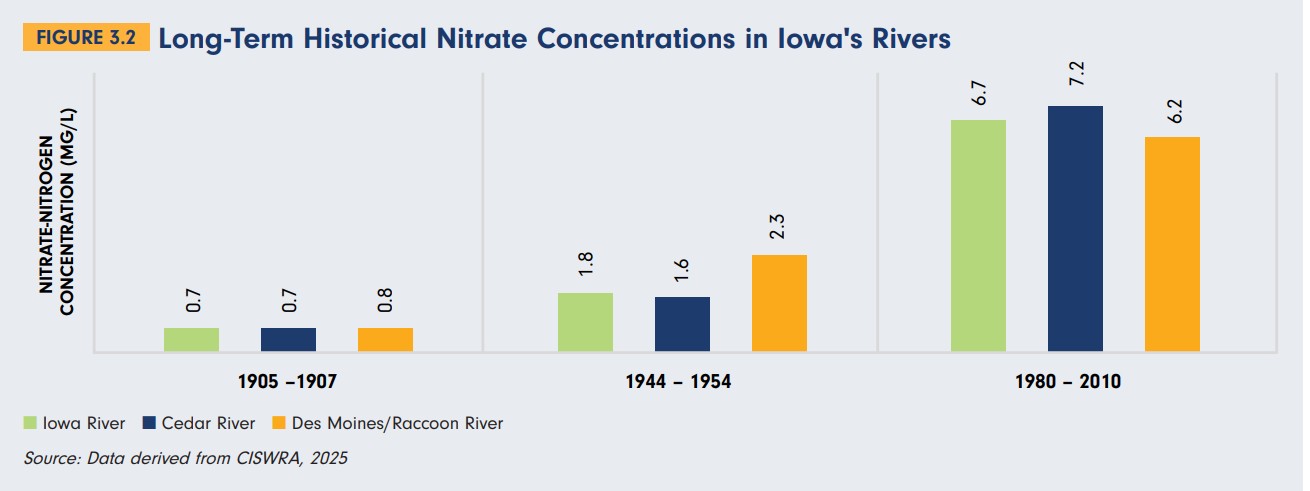
Industrial agriculture groups have also claimed that seasonal nitrate spikes are merely due to normal spring rains or flow after a drought; however, nitrate levels have remained high in Iowa rivers throughout the past 12 months. Even more telling: Nitrate levels in Iowa waterways have steadily and dramatically increased in the past two decades, as shown in the chart below from IEC's cancer report with data from the Central Iowa Source Water Research Assessment.
Frequently Asked Questions
How Do I Know if My Tap Water Safe to Drink?
If you receive water from a public water utility, that entity is legally required to comply with the federal nitrate standard of 10 mg/L to protect against short-term effects like blue baby syndrome. Public water systems test for nitrate. If measurements exceed the standard, they must take corrective action through treatment, blending of water sources, and conservation measures and notify the public.
However, meeting a regulatory standard is not necessarily the same as avoiding health risks. As noted above, an increasing number of studies show that drinking water as low as 2 mg/L consumed for extended periods of time is associated with increased risks of certain types of cancer and other health effects. As a result, the question of whether water is “safe” depends on regulations and emerging scientific evidence about chronic exposure over many years.
Should I Drink Bottled Water Instead of Tap Water?
For most people using a public water utility that meets federal standards, bottled water is not necessarily a safer option. Public tap water is regulated by the EPA under the Safe Drinking Water Act (SDWA), while bottled water is regulated by the FDA as a packaged food product. Federal law requires FDA standards for bottled water to meet at least the EPA standards for tap water. For example, the FDA has adopted the EPA's maximum contaminant level for nitrates — requiring concentrations in bottled water to stay below 10 mg/L. Check individual brands’ websites to gauge levels.
However, FDA regulations do not require bottled water labels to disclose the water's source or contaminant concentrations, such as nitrates, PFAS, or microplastics. Nitrate is not commonly removed before bottling unless the label specifies treatment with reverse osmosis, deionization, or distillation. In fact, a Natural Resources Defense Council (NRDC) study found that roughly 25% of bottled water is sourced from tap water, and approximately 22% of brands tested contained chemicals above regulatory limits in at least one sample. Bottled water has been found to contain microplastics generated by the packaging process and materials, and bottled water kiosks can leach other contaminants, such as lead, into the drinking water.
People who are pregnant or preparing formula for an infant may want to use bottled water treated by reverse osmosis, deionization, or distillation if their tap water may contain high nitrate.
What If I Get My Water from a Private Well?
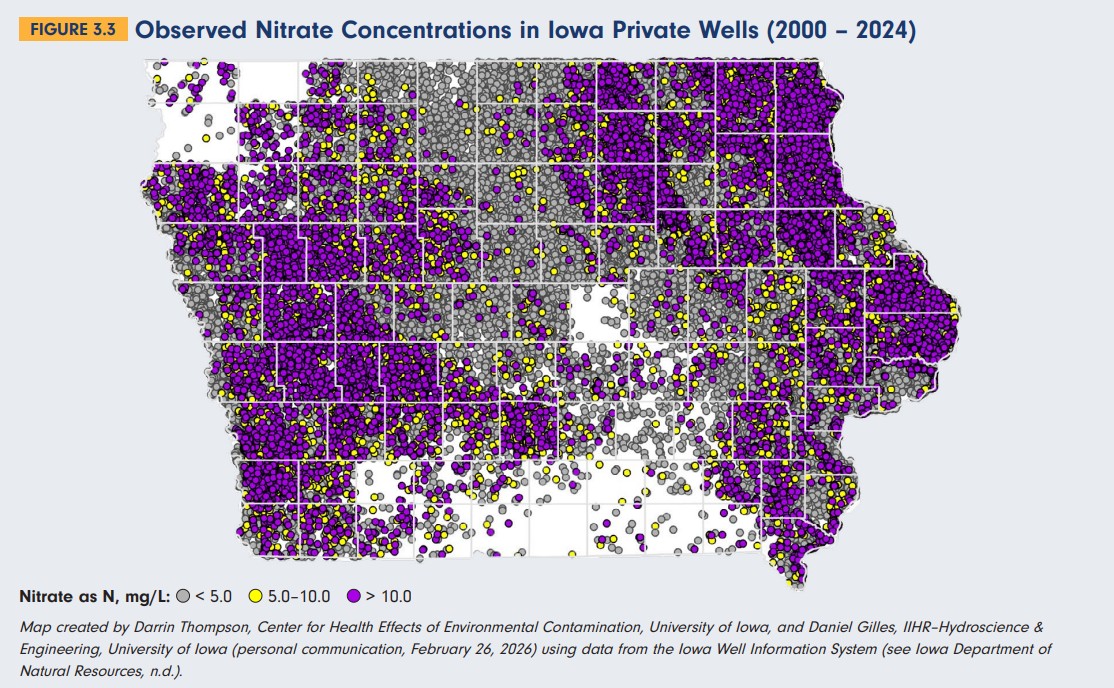
An estimated 230,000 Iowans get their drinking water from a private well. Unlike public water systems, private wells are not monitored or regulated in Iowa. Well owners are responsible for testing their own water.
Recent analysis of private well samples found that thousands of private wells in Iowa test above 10 mg/L for nitrate, and many others test between 5 and 10 mg/L. This map is from IEC's cancer report, and was created by Darrin Thompson, Center for Health Effects of Environmental Contamination at the University of Iowa, and Daniel Gilles, IIHR-Hydroscience and Engineering at the University of Iowa.
According to the Iowa DNR and the Iowa Department of Health and Human Services, private wells should be tested every year for contaminants, including nitrate. Wells should also be tested when the well is new, when a well, well pump or water system is serviced, or if you notice a change in the way the water looks, smells, or tastes. Iowa’s Private Well Grants Program provides free water testing to all private well owners and users. Contact your county health department to learn more and get your well tested.
Does Boiling Water Remove Nitrate?
No. Boiling water does not remove nitrate. Boiling can concentrate nitrate because some water evaporates while nitrate remains behind.
How are High Nitrate Levels Linked to E. coli and Microcystin Toxin in Recreational Waters?
High nitrate and phosphate levels, E. coli contamination, and microcystin-producing harmful algal blooms (HABs) often share the same root cause: excess nutrient pollution from fertilizer runoff, livestock waste, and failing septic systems.
While E. coli is introduced to the environment through the digestive systems of livestock, humans, and wildlife, nitrate and phosphate pollution acts as fuel. Elevated nutrient levels feed algal growth, which can produce microcystin toxins, and create conditions that support the rapid growth of E. coli. As a result, these water quality issues are frequently linked and tend to occur in watersheds impacted by agricultural and urban runoff, yet each type of contamination poses distinct human health risks.
Can Nitrate Pollution be Addressed?
Yes. Iowa rivers have among the highest nitrate concentrations in the U.S. The majority of Iowa’s nitrate pollution comes from agricultural sources — fertilizer and manure application. The large amount of Iowa’s land used for row crops (primarily corn and soybeans) and the extremely high amount of manure produced by Concentrated Animal Feeding Operations (CAFOs) are major contributors to nitrate contamination. Iowa has more than double the number of CAFOs of any other state.
Commonsense policies, which other states have already implemented, could reduce Iowa’s nitrate pollution. Conservation practices (such as buffer strips, cover crops, and more comprehensive and stringent nutrient and manure management requirements) can help keep nitrate in the soil and out of waterways.
Iowans also deserve access to current data that shows real-time nitrate measurements. Unfortunately, the Iowa legislature removed funding from Iowa’s state-of-the-art monitoring network operated by experts at the University of Iowa–Hydroscience and Engineering. The water quality data this network provides is the only real measurement of progress on this issue, not dollars spent or acres enrolled in conservation practices.